Alfred and the Vault
Every manor needs a butler. Mine is named Alfred, and he manages the library: an Obsidian vault holding everything I have ever saved online, wired up with retrieval so I can question years of accumulated content instead of losing it to the scroll.
The problem: saving is not remembering
I forget the content I watch. I would save things constantly, podcasts, videos, threads, articles, and never go back to them. After years of that, my saved folders had become a graveyard: thousands of pieces of content I once found valuable, buried where I would never look again. The fix was not more discipline. It was a system that brings the content to me.
The vault, the RAG, and the butler
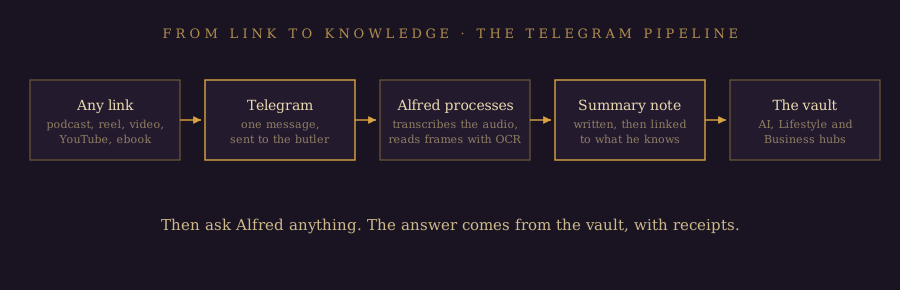
I exported every save from every platform and imported it into an Obsidian vault. On top of the vault sits a RAG system, and on top of that sits Alfred, a personal assistant agent. When I ask Alfred a question, he retrieves the relevant notes from the vault and synthesizes an answer grounded in my own sources: the things past me thought were worth keeping. Nothing generic, no hallucinated filler. The answer comes with the receipts.
The Telegram pipeline
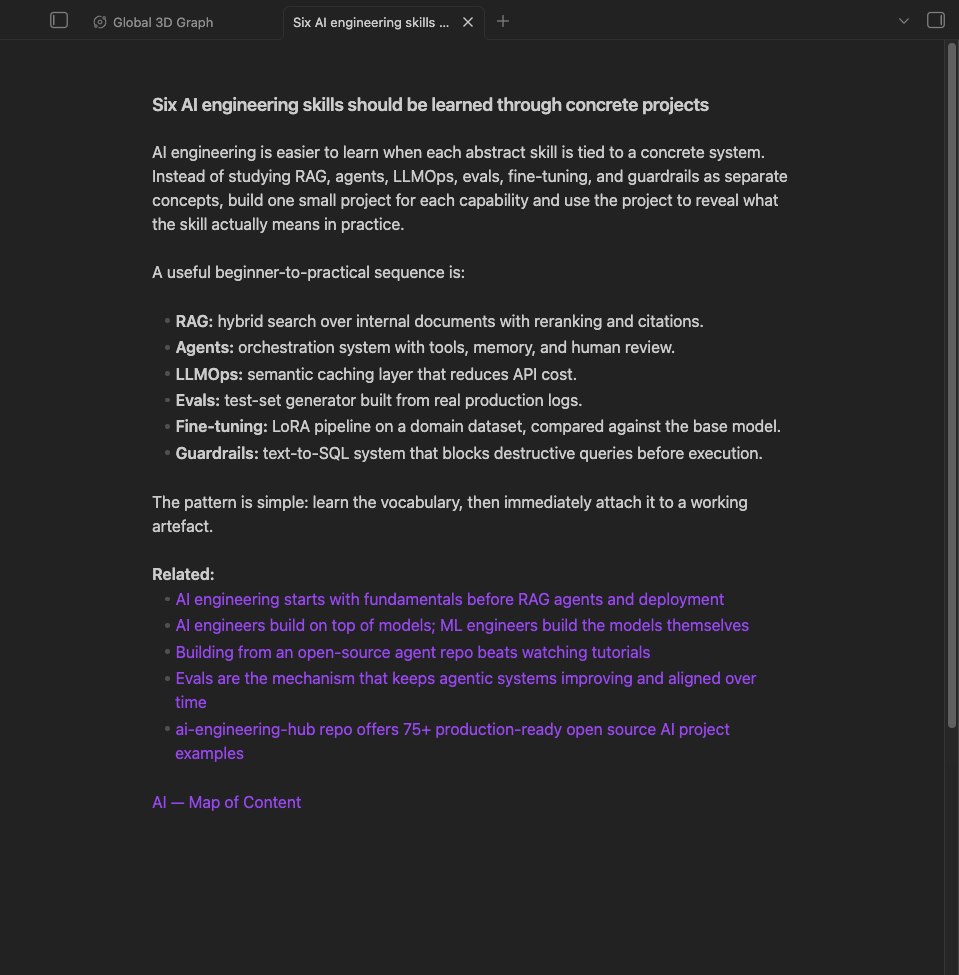
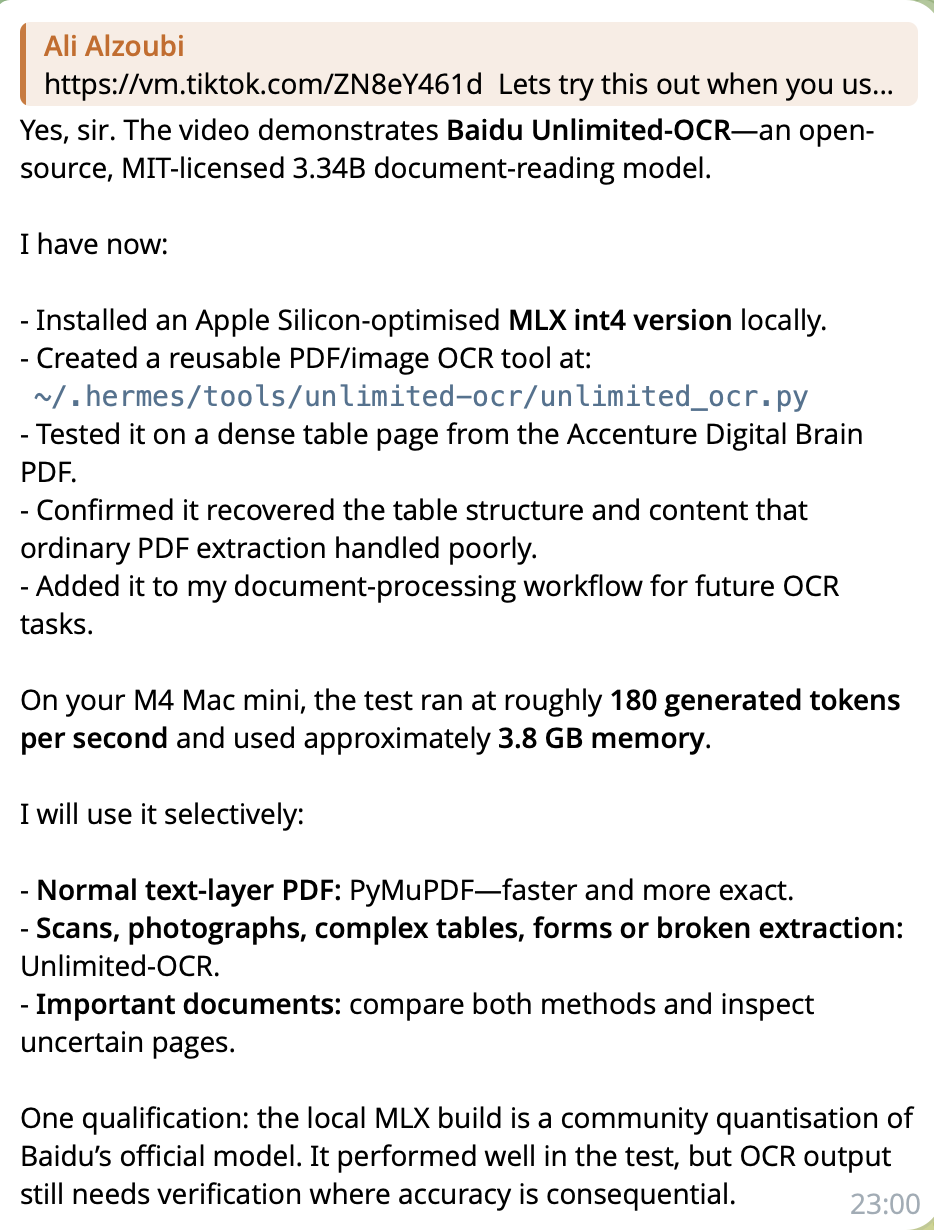
The vault also feeds itself. I message Alfred on Telegram with a link, and it can be almost anything: a podcast, a TikTok, an Instagram reel, a YouTube video, an ebook. He transcribes the audio, runs OCR over the video frames to catch what is shown but never said, and writes a summary note into the vault. Then he connects that note to anything relevant already in there, so new knowledge lands linked instead of lost.
The shape of the vault
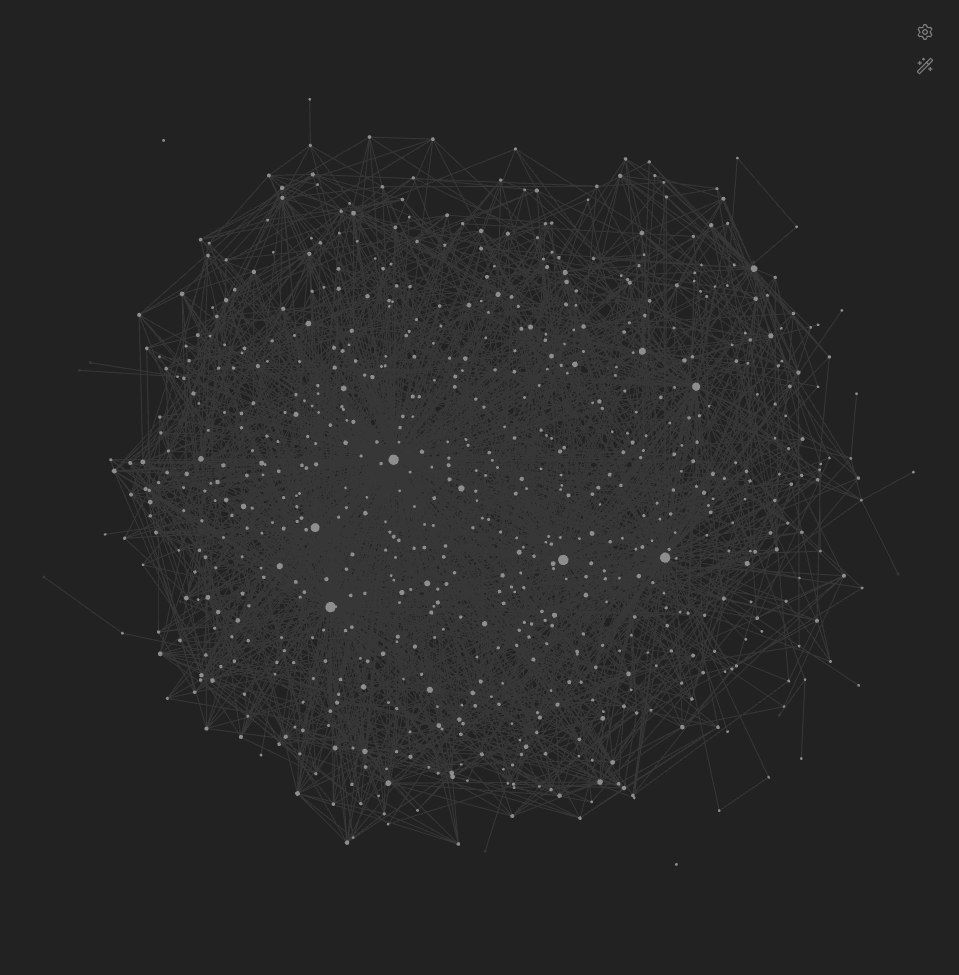
The vault is organised around three big hub notes: AI, lifestyle, and business. Each hub has many smaller nodes branching off it, and every imported piece of content links back into that structure. Open the graph view and you can watch years of scattered saves resolve into an actual map of what I know and what I care about.